The change in attitudes towards mental health at workover the past few years has opened an opportunity for us to evaluate our attitudes towards health and wellbeing in the workplace.
A 2026 report revealed that 20% of UK workers took time off work due to poor mental health, showing that the impact of mental health contributes to have a persistent impact on the workplace. With more people talking about their mental health experiences, how have employee perspectives changed?
In 2021, we asked 1,500 people from across the UK about their attitudes to workplace wellbeing and mental health. But what has changed in recent years, and how should employers adapt o changes in mental health at work?
Using the data collected, we explore the most pressing mental health challenges faced by UK workers and how employers can support their people in the workplace.
What impact has our changing attitude to mental health had?
In 2021, results revealed employees took an average of 3.36 days off due to mental health at a cost to businesses of £12.7bn. In 2026, MHFA England reported an average of 23 days off per worker due to stress, depression, and anxiety, showing a steep increase in mental health leave in the past 5 years.
As attitudes towards mental health change, HR leaders must adapt their approach to employee wellbeing. The majority of workers in 2021(68%) think employers are more aware of mental health issues now, and with this awareness comes an expectation for businesses to offer robust support for their people. Meanwhile, in 2026, only 52% of workers believe their managers are equipped to offer support for mental health in the workplace.
Not only does this reflect how employers are working towards building awareness of mental health issues, but now must be prepared to offer support to their workers.
Mental Health First Aid Training can help employers breakdown stigma of metal health at work whilst promoting a positive culture around early intervention. Book a single place on a Mental Health First Aid Course here to start your journey.
It is important that we acknowledge the impact of major world events on mental health at work. For example, by reflecting on the pandemic’s influence on mental health, this report reveals the business impact of mental health absences. Our experts take a look at at the challenges employees faced, as well as evaluating their new expectations and priorities as a result.
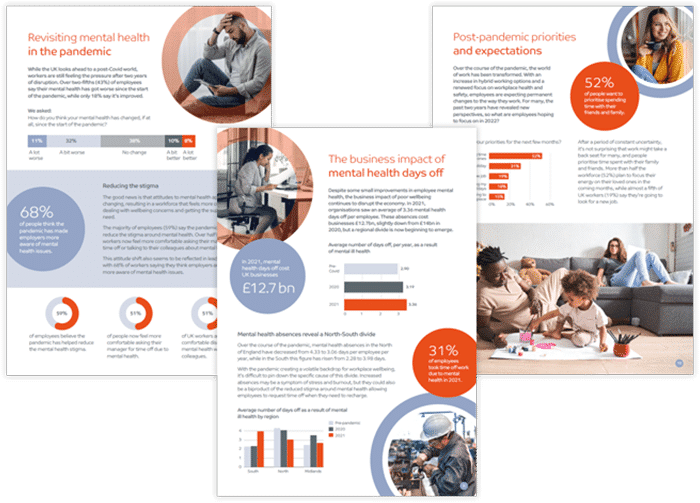
Key findings include:

91% of employees report experiencing high levels of stress in 2026.

22.1 million days were lost to stress, depression and anxiety in 2025.

Mental health days off cost UK businesses approximately £51 bn in 2026.

Only 45% of leaders have been trained to have mental health conversations.

64% of HR professionals reported stress-related absence in their organisation in 2026

63% of people reported worries about the increased cost of living in 2026.

38% of business leaders talk openly about mental health in 2026.

92% of people agree that Mental Health First Aiders contribute to healthier workplaces.