
British people sit for an average of over 7 hours a day, and almost 70% of this takes place at work. Studies have linked excessive sitting to cardiovascular disease, increased risk of deep vein thrombosis, obesity, colon cancer and type 2 diabetes.
Just 30 minutes of moderate exercise per day is enough to counteract these effects, but many people struggle to stay active due to a perceived lack of time or motivation. Rather than trying to fit exercise into their spare time, employees should be encouraged to build activity into their daily routine, breaking it down into manageable chunks.
While there’s no one-size-fits-all solution, everyone can find a form of exercise that suits their lifestyle and that they enjoy. Here are our quick tips to help you and your team stay active at work.
1. Warm up for work
Start the day off with some light physical activity to wake up your body and get the blood flowing.
It can be as simple as spending five minutes warming up the muscles you’ll use during the day. Try shoulder rolls, neck stretches and wrist and ankle circles to help warm up your joints.
You could also use this time to set an hourly reminder to check your posture and adjust your seating or standing position.
2. Switch up the commute
For many of us, commuting looks the same each day. It’s easy to slip into the same old routine, but the commute is a great opportunity to build exercise into a busy schedule.
If you drive into work, you could park a little farther away to get some extra steps in. If you commute via bus or tram, try getting off a stop early instead. For those who want to take it up a notch, consider switching to cycling or walking to work, even just one day a week.
If you’re working from home, start with a brisk 20-minute walk to ‘commute’ to your desk and break up your morning routine.
3. Build mini workouts into your day
You don’t have to work up a sweat to feel the health benefits of exercise in the workplace. It could be as simple as standing up during meetings to burn more calories and improve your circulation or taking to the streets with a walking catch-up, either in person or on the phone.
Try setting yourself a daily challenge to complete around the workplace. Can you climb 10 flights of stairs during the day, or stretch to touch your toes each time you stand up?
If you want to take it to the next level, get the whole team moving with a 10-minute workout at the end of your meetings or try a mini circuit of star jumps, squats and planks.
4. Get moving during breaks
Taking regular breaks helps keep us motivated and makes us more productive. Offering to do the coffee run is an easy way to move more and sit less during the day. You could take a short walking break to get some fresh air and explore the local area or build a lunchtime workout into your day by hitting the gym or following an online exercise class.
5. Get colleagues involved
We all need a bit of encouragement to reach our goals sometimes, and a like-minded workout buddy will help keep you motivated. Swap exercise tips and share your progress to keep each other accountable.
On a wider scale, you could hold a workplace step challenge or join an amateur sports league to keep fit and bond with your colleagues.
Free videos and workplace posters
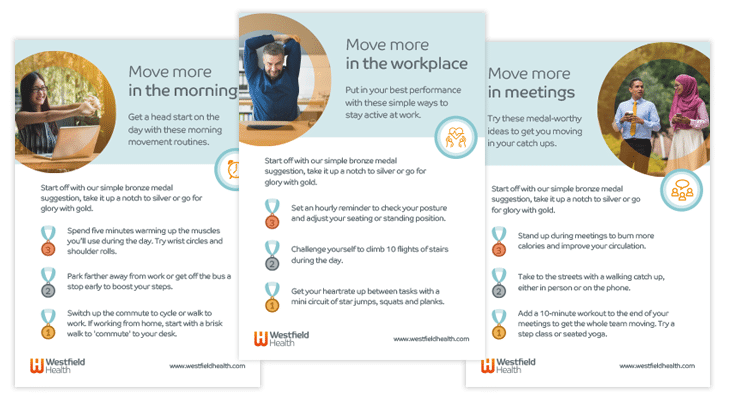
We’ve put together a series of four workplace workouts that are easy to integrate into the working day. They require no equipment and can be done in a quiet corner of the office, a meeting room or from home.
You can also download our free workplace posters to share with your employees and inspire them to build physical activity into their working day.
Download the posters as a PDF.
Workplace Activity – FAQ
What does it mean to be active at work?
There is no single definition of what it means to be active at work, as it depends on individual circumstances and the opportunities for movement in your day-to-day role. For physical and mental well-being, find regular opportunities to move throughout your working day, avoiding prolonged sitting.
What are the benefits of being more active at work?
Employee movement and activity at work can support both physical health, mental wellbeing, and overall quality of life – both at work and in their personal life. Regular movement can contribute to healthy cardiovascular health cardiovasacular health, muscles, and bones, as well as maintaining a healthy weight and balanced mood.
There are further benefits for employers who encourage and remove barriers to being more active in the workplace, making it a strong addition to a wellbeing strategy. Making activity easier to build into the working day can help create a healthier workplace culture, while supporting employees to build sustainable habits.
How can I encourage employees to be more active at work?
Employers can encourage their employees to be more active by making their opportunities for movement easier, more accessible and removing barriers to activity throughout their working day. For any team, this may look different, but can include:
- Allowing and encouraging walking meetings and catch-ups where possible.
- Promoting short bursts of active breaks that allow workers to get away from their desks.
- Offering a cycle or walk to work scheme that encourages team members to be active before work.
- Providing information, guidance and advice where appropriate or where asked for.
- Offering flexible working opportunities that empower workers to take control of their own activity throughout their days.
What are the common barriers to being active at work?
Although there are numerous reasons why we encourage activity at work, it is important to acknowledge barriers to movement for employees that may need consideration when developing policies and wellbeing strategies. These include:
- Busy workloads
- Long periods of sitting at a desk
- workplace culture
- lack of suitable opportunities or facilities
Taking time to assess and understand these barriers is a crucial step towards introducing workplace initiatives that are feasible and empowering for team members. The goal should be to remove barriers to movement where possible, and provide inclusive opportunities for individuals to move in a way that suits their needs, preferences and abilities.