
While a bit of pressure can drive us to reach our goals, too much strain can make us anxious and frustrated, eventually leading to burnout. To mark #NationalLazyDay on 10 August, we’re exploring some easy ways to control stress and focus on rest and recovery, before reaching burnout.
So, where does the idea of ‘diamonds are made under pressure’ come from? In 1908, two American psychologists developed the idea that shaped the modern concept of thriving under pressure. The theory plots a curve on a graph showing the relationship between stress and performance.
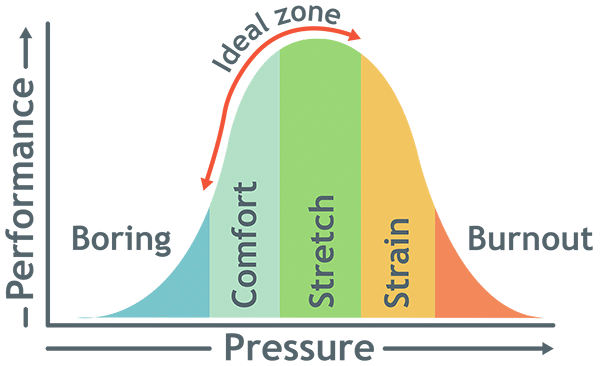
At it’s core, this theory stresses the importance of being attuned to where individuals sit on this curve, and feeling in control of how they are controlling stress, rather than feeling their stress is controlling them.
In times of stress, take some time to consider where you and your team sit on the pressure performance curve and how this might be impacting not only productivity but also mental health.
If stress is high and performance is being impacted, try these three tips to control stress, while prioritising rest and recovery.
1. Build control by adding relaxation into your workday
Work and recovery time don’t have to be kept separate. Studies show that many people struggle to be productive for the whole workday, so it makes sense to schedule some time for rest and recovery, allowing you to refocus before taking on your next task.
Our 10-minute workplace workout videos include a short meditation you can do anywhere. Find a quiet corner of the office and listen with headphones or try it with your colleagues at the end of a meeting.
2. Use the Eisenhower Matrix to streamline your to-do list
An effective to-do list can help create space in your mind to focus on what’s important. The Eisenhower Matrix is a popular technique to help prioritise your workload and bring a sense of order back to a hectic schedule.
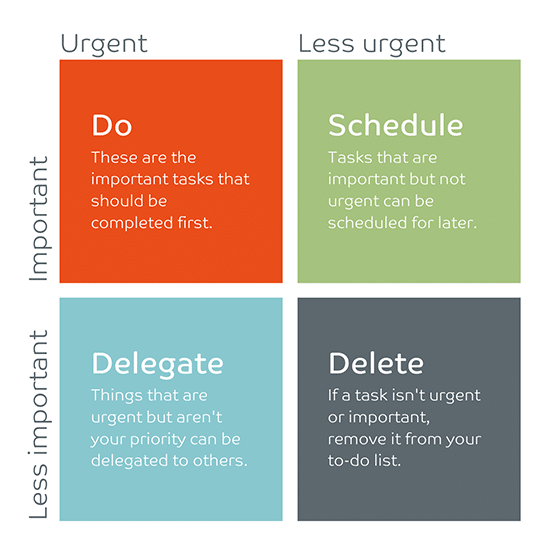
Sort upcoming tasks into the four quadrants based on their urgency and importance. The matrix gives you four actions: do, schedule, delegate and delete. Organising your to-do list helps you to plan your day and reduce unnecessary stress.
You could try colour-coding items on your list to make it easier to see what’s truly important. Remember to allow some time for recovery between tasks and avoid spending too much time in any one quadrant to make your workday more effective.
3. Be the boss of your work life balance
Working from home may struggle to switch off at the end of the day. The decisions we take at the beginning and end of the day can have a major impact on how well we recover. It can be difficult but being strict with your work life balance is the best way to make time for rest and recovery. A few practical changes to our daily routine can save make us feel calmer and better equipped to enjoy our free time.
If you’re working from home, try to keep your work and living spaces separate. It can be difficult in small spaces but having a designated workspace or even just packing your laptop away each night can help you switch off from the stress. If you usually start working on the commute, try listening to a podcast instead. After work, switch your mood by having a relaxing bath or practising a gentle yoga routine.
The most important thing is to be consistent and strict with your work life balance, and managers should encourage colleagues to prioritise their downtime so they feel refreshed and recovered each working day.
Useful Stress Management Resources
If you have found these tips to control stress useful, you may want to explore the following resources to support workplace stress management:
- Mind.org relaxation techniques – Some easy relaxation tips to share with your colleagues.
- Headspace – Our favourite meditation app for beginners.
- 10-minute workplace workouts – Our YouTube series of short energy-boosting exercise routines.
- Wellbeing webinars – Sessions on topics including work life balance and applied relaxation.
- Resources for HR teams – Further information and guides to help you support your people.