
Mental Health reported that 1 in 5 workers have taken time off due to stress in 2026, with key drivers being reported as increased workload (42%), fears around job security (32%), poor sleep (59%) and financial worries (48%).
In the workplace, employees continue to face daily challenges that are contributing to these high rates of employees dealing with stress at work. Simply going into work carries a heightened sense of risk, especially for those using public transport or working in close contact roles.
With employees increasingly seeking support from their line managers, how can we help to reduce the impact of stress on our people?
Pressure vs performance
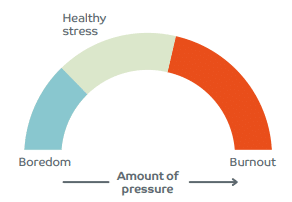
It’s natural to for employees to deal with stress at work at times, and a little pressure can help keep us focused on our goals.
The stress curve shows that people perform best when working at – or slightly beyond – their comfort level. However, sustained stress can impact performance and eventually lead to burnout.
Dealing with change
Change at work can be a common cause of stress for employees, Research by organisational psychologist Jim Bright suggests a third of us would avoid change if we could. Our brains are wired to expect familiarity, but when our habits are disrupted, we feel a sense of unease and uncertainty.
To help your team cope with change, encourage them to focus on the things they can control. Building consistent and healthy habits can help us feel more grounded when things get tough.
Allowing employees to share their worries and opinions can help you make small organisational changes to provide the support they need.

Spotting signs of stress
While a little pressure can help us be more productive, it shouldn’t negatively impact our behaviour at work. It’s important to check in with those who may be showing signs of stress. Those closest to the employee are best placed to do this, so line managers should be aware of the symptoms and know how to respond.
Look out for these common signals which may signal that an employee is dealing with stress to know when it’s time to step in:
- Difficulty concentrating
- Forgetfulness
- Trouble with decision-making
- Booking last-minute days off
- Worrying about routine tasks
- Feeling overwhelmed
- Short-temperedness
- Increased use of alcohol or cigarettes
5 tips to reduce stress at work
- Ensure managers are trained to offer support and feel confident doing so. Our health leadership training webinars offer a useful introduction, suitable for all levels.
- Encourage employees to take time out, whether it’s a long weekend or simply a lunchtime stroll to recharge.
- Where possible, allow people time to plan. This healthy habit makes it easier to deal with new situations.
- Be honest about your own stress levels and reassure employees that they can approach you for support without judgement.
- Keep in touch with your team and ask direct questions about their workload and stress levels in your regular catch-ups
Conversation starters to try:
How are you coping with the current situation?
How manageable is your workload at the moment?
What helps you switch off at the end of the day?
How do you feel about your current deadlines – are they realistic?
What can I do to support you?
Useful resources and links
- Stress.org.uk: The Stress Management Society
- HSE Talking Toolkit: Stress: A comprehensive stress toolkit for managers
- Wellbeing webinars: On topics including resilience and work-life balance
- Mental Health First Aid courses: Certified training to help your people support each other
You can download a PDF version of this guide to share with line managers.