
When introducing a new wellbeing initiative to the workplace, it’s important to remember that change takes time. Each individual’s mindset, motivations, and priorities will impact their readiness to adopt new habits and change their routine.
Whether you’re introducing a lunchtime gym class, piloting a cycle-to-work scheme or providing mental health training, it’s helpful to understand what makes your people feel engaged and what might be preventing them from getting involved.
Several different models explain how and why we change our behaviours. In this blog, we explore how businesses can use the COM-B behaviour change model to encourage their people to engage with new workplace initiatives and make healthier choices.
What is the COM-B theory of behaviour change?
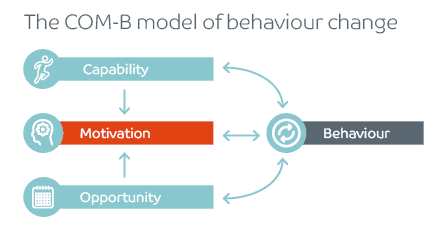
The COM-B behaviour change model proposes three key drivers of behaviour: capability, opportunity and motivation.
- Capability: Individuals must feel that they are both psychologically and physically able to perform a behaviour.
How to help with this: Provide clear communication about what people can expect. Pitch activities at the right level. Offer multiple ways to engage with the new behaviour.
- Motivation: Employees must want or need to engage in the behaviour more than in competing behaviours.
How to help with this: Use feedback to identify common issues and plan support in these areas. Work to create a culture where health is a priority.
- Opportunity: Employees must have the social and physical opportunity for the behaviour.
How to help with this: Provide flexibility to fit wellbeing into the working day. Offer regular opportunities to get involved. Use social proof to encourage group behaviour change.
When the above conditions are met, people feel empowered to enact a particular behaviour. The behaviour itself creates a feedback cycle, which encourages or discourages similar behaviour in the future.
Once a behaviour change has taken place, encourage your people to share their feedback to ensure they’re having a positive experience (and improve it if they’re not).
Applying the COM-B behaviour change model
Now that we understand more about how the com b behaviour change model could guide your people through change in the workplace, it’s time to see it in action. Below we have created an example scenario that you may come across when introducing new wellbeing strategies into your team.
Example: hosting a stress awareness webinar
In this example, an organisation is hosting a webinar to help employees recognise and deal with stress. Attendance at webinars has been poor in the past, but the HR team have received many requests for this particular topic and wants to maximise its impact.
Here are some ways they might help employees at each stage:
- Stage 1: Improving capability
A calendar invite is shared, with the webinar scheduled during core working hours to maximise availability. The HR team request for the session be recorded and shared with employees who can’t attend the live event. - Stage 2: Increasing motivation
Employees are informed about the webinar a month in advance, and managers are encouraged to arrange their team’s workload to allow time for them to attend. Teleconferencing equipment is set up for on-site workers who don’t have access to their laptops. - Stage 3: Increasing opportunity
Employees receive a series of messages about the upcoming webinar via email and posters are put up in the canteen. Managers discuss the topic with their direct reports in their 1:1s. The HR team shares a marketing pack explaining what attendees will learn and how it’ll help improve their wellbeing. - Stage 4: Enacting the behaviour
The webinar is then delivered by a certified expert. Employees receive resources to take away to help them embed their new learning. More than half the workforce attends the live session, and the HR team follow up with a feedback questionnaire. This helps them gather suggestions for future webinars and identify how people are putting their new skills into practice.
It is important to remember that different groups will face their own unique challenges when it comes to behaviour change, so it’s useful to consider how the COM-B behaviour change model can be applied to both new and existing activities across the organisation.
For more information about structuring your activities, try our blog on whole-of-workforce wellbeing.
Find out more about building a wellbeing strategy.
Our free Workplace Strategy Workbook includes over 30 pages of tips to build your wellbeing strategy and help your people create healthier habits.
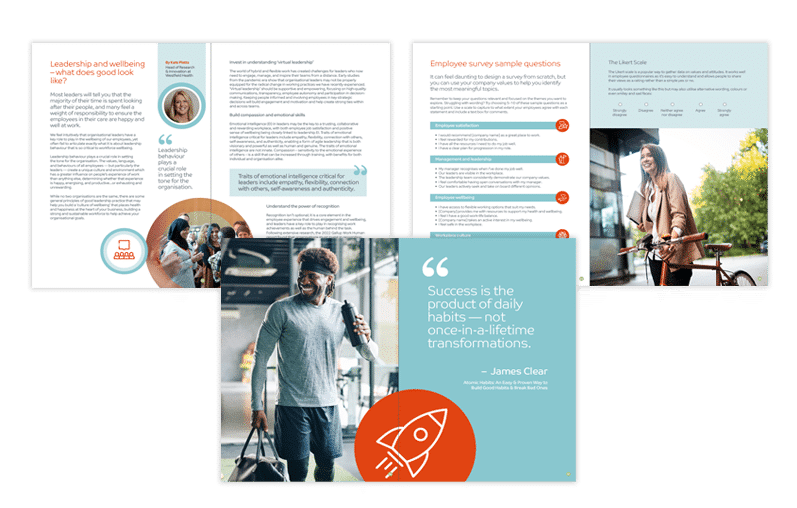
From influencing company culture to engaging leaders and business partners, the workbook contains three chapters of guides, ideas and resources to help you create an effective wellbeing programme for your business.
COM-B behaviour change model – FAQ
Who developed the COM-B behaviour change model?
The COM-B behaviour change model was developed by Susan Michie, Maartjie M Van Stralen, and Robert West in 2011.
How can I apply the COM-B model to improve personal habits?
This behaviour change model can absolutely be applied to inspire and maintain personal habits and behaviours. If you are looking to get started applying this process to your own lifestyle, start with a few key questions that can help you understand how it could help you.
- Capability stage: Do I know how to physically or mentally change this habit or behaviour
- Opportunity stage: Does my current environment support this habit or behaviour change? If not, what changes can I make to ensure my environment supports my change?
- Motivation stage: Why do I want to make this change? How will I feel rewarded for making the change?
- Behaviour: Now that I am ready, what is the first action I need to complete to change this habit?
How does the behaviour change model help in designing effective interventions?
Whether you are seeking a change in your personal life or preparing to roll out a new team initiative in your business, the COM-B behaviour change model can be a useful tool in designing effective behaviour interventions.
By providing a research-backed formula, you can understand the meaning behind the behaviour you are trying to change or encourage. With this structure, you or your team can feel equipped with the right tools, intervention strategies and policies to create meaningful changes.
What are some barriers to behaviour change?
Barriers to behaviour change in any workplace can be psychological, social, or environmental. These barriers can be complex and deeply personal, so it is important to take the time to understand your team’s motivations, barriers and attitudes towards change.
Here are some examples of psychological, social or environmental barriers to behaviour changes that you may need to consider.
- Change fatigue: Change fatigue can be caused by continuous shifts in direction and new initiatives being introduced, which can cause mistrust in future changes. By taking a strategic path to introducing new wellbeing initiatives, you can prepare for long-term change that empowers your team.
- Missing knowledge or awareness: As an employer, you are responsible for supporting your team in accessing the knowledge and information they need. If they are missing information, knowledge, or skills, they may not know the steps to take to begin behaviour changes. Westfield Health offers many guides, resources and CPD training courses to help your team feel equipped and prepared for changes in the workplace.
- Habit and routine: It is common for individuals to establish habits and routines in their working day. Changing established habits and routines can require a great deal of motivation and effort in the team. At Westfield Health, we can offer advice and support to help your people build habits and routines that support wellbeing and productivity at work.
- Physical barriers: There can be physical elements of your workplace that impede real and positive changes in behaviour. You may need to make adjustments to the workplace and equipment that you provide to support positive change in your team.