
In our 2026 Wellbeing Trends report, we explore the most-searched health and wellbeing topics and how they’ll impact businesses in the coming year.
One consistent theme over recent years is the emphasis on health education and preventative healthcare, as people look to proactively support their own wellbeing in the workplace. With health at the forefront of our minds, the public are becoming better informed – but also more anxious to prevent health issues as pressure on the NHS continues to grow.
Key findings from the report:
- Long-term sickness is an all-time high.
- 2,830,000 people aged 16-64 experience absence due to long-term sickness.
- 75% of workers report being concerned about the cost of living, which may detrimentally impact personal healthcare
- There has been a surge in individual health tracking
- Searches for ‘local walking groups’ are up by 300%, and forecast to grow in 2025.
With health information at our fingertips, our focus is shifting away from quick fixes and towards a more holistic, whole-of-life approach.
The data from our UK report shows that our interest in health education and personal responsibility for wellness shows no sign of slowing down.
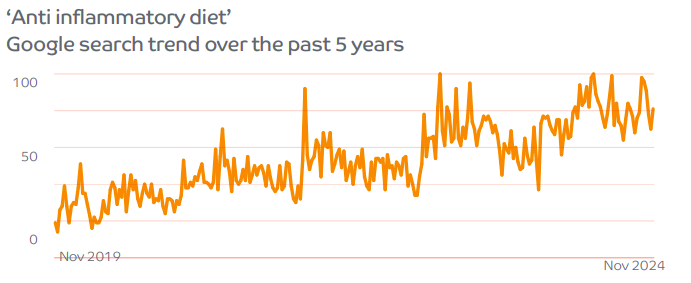
Search trends suggest we’re less interested in trending diets or quick fixes that only have a temporary benefit to our long-term health. Instead, we are seeing a growing trend in making meaningful and lasting diet changes for our lifestyle, such as anti-inflammatory diets. For individuals, this reflects a meaningful adoption of preventative diets and a desire to understand what we can do to protect our health everyday.
For employers, this attitude shift means workers are now expecting support for their health-conscious choices in the workplace. Whether it’s lunchtime gym classes, healthy food options or a standing desk setup, our increased understanding of wellbeing means we want to be proactive about our health both in and outside of work.
Alongside this rise in individual health responsibility, we continue to see searches like ‘NHS waiting times climb, from 17 in January 2020 to 73 in January 2025, fuelling anxiety around access to healthcare in the UK. 2026 NHS statistics have also shown dramatic increases in waiting lists for hospital treatment to 7.1 million in March 2026
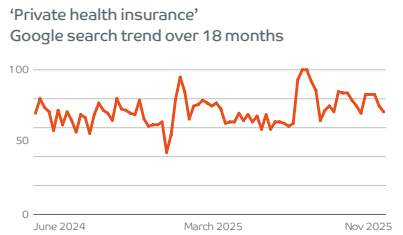
This lack of trust in the NHS is now driving people to put their own preventative measures in place.
In 2026, searches for private medical insurance has increased by 90% since 2021, as people look for peace of mind in the face of uncertainty. In fact, 2026 data now shows that 4 in 10 people have accessed private healthcare in the past 12 months as demand rises.
Sales of health cash plans are also on the up, as people look to save money on their routine healthcare and ease the cost of going private for dental, optical and therapy treatments.
The number of people on long-term sick is on the rise, with 2,830,000 people aged 16-64 experiencing sick leave from work due to long-term health concerns in 2025, providing particular challenge to workers and employers.
ONS results reveal that the rate of sickness absence in 2025 was 2%, with an estimate of 148.8 million working days lost due to sickness or injury in the year. Of these reported absences, 14.6% were due to musculoskeletal conditions while 8.9% were mental health related, showing a serious need to address physical and mental health in the workplace.
To read more about the workplace wellbeing trends we’re predicting for the coming months, download our free Wellbeing Trends report. It explores key health and wellbeing topics to give you a head start on employee wellbeing in 2023.
The report uses data from sources including the Office for National Statistics, the NHS, Google search trends and our own wellbeing research to help you plan and prioritise your wellbeing support.
Comments
I think it’s crucial for companies to invest in preventative healthcare for their employees. After the pandemic, we’ve seen how important it is to prioritize health and well-being. This not only helps individuals but also reduces pressure on healthcare systems like the NHS. A healthier workforce is a more productive workforce!