We’ve all heard that good sleep, rest and recovery are essential for feeling our best. Rather than fixating on intense exercise, more people are starting to tune in to their bodies and focus on a well-rounded approach to wellbeing, making rest a central part of self-care.
Despite this growing awareness, Mental Health UK reports that one in five people don’t get enough sleep each night. Lack of rest doesn’t just leave us tired – it can lead to fatigue, weakened immunity, lower stress tolerance and poor mood. So, is making time for proper rest the simplest way to feel better, inside and out?
Restorative vs unproductive rest
Rest and recovery are essential for feeling your best, but many of us fall into habits that don’t truly recharge us. Whether it’s after a long day at work or a job that includes manual labour, recovery matters just as much as activity.
So, what works best? Research shows that 88% of Brits believe spending time in nature is the ultimate way to recharge. Activities like wild swimming, hiking or taking a mindful walk outdoors offer a deeper sense of renewal than passive downtime. On the flip side, common negative habits like ‘bed rotting’ (54%), endless scrolling (54%), and comfort eating (66%) were rated least effective, yet over half are still using these as downtime. They might feel soothing in the moment, but they don’t deliver the same mental reset as purposeful recovery.
Further reading: Our manual workers wellbeing guide includes information on how intentional rest can help prevent burnout and protect long-term health.
Getting more active, getting more rest
Taking ownership over health is on an upward trajectory, with 58% of people feeling more health-conscious than five years ago. Physical fitness remains a major focus, as evidenced by social media influencers, home workout trends and record participation in events like the London Marathon. But alongside this surge in activity, rest is emerging as a critical component of wellbeing.
Surveys reveal that even avid gym-goers average 2.5 rest days per week. These breaks aren’t just downtime, they’re strategic. They support muscle growth by repairing muscle fibres, reduce injury risk by allowing recovery time and promote a sustainable work-rest balance to avoid over-exertion. This shift reflects a more holistic approach to health, where recovery is as valued as exercise.
How does sleep affect our mental health?
Rest isn’t complete without good sleep. When you sleep well, your body repairs itself, your brain consolidates memories, and your mood resets. Poor sleep, on the other hand, impacts everything from immunity to productivity. This is why 40% of people say their sleeping patterns are a key aspect of taking care of their mental wellbeing and 68% of gym-goers said improving sleep quality was a key motivator to doing physical exercise.
The average person goes through four to six sleep cycles per night, each with distinct stages:
- Stage 1: About 5% of overall sleep, when you first drift off and breathing remains similar to when awake.
- Stage 2 (Light Sleep): Roughly 45% of sleep, where your body begins to relax and cycles lengthen as the night progresses.
- Stage 3 (Deep Sleep): Around 25%, crucial for repairing tissue, building muscle, and strengthening immunity.
- Stage 4 (REM Sleep): About 25%, the stage where dreaming occurs and emotional regulation takes place.
Understanding these stages highlights why quality sleep matters, ensuring enough deep and REM sleep for full recovery.
How can businesses encourage rest and recovery?
Create dedicated spaces for recharge: Provide spaces where employees can take short breaks away from their workstations to reset during the day.
Encourage micro workouts during the workday: Support the trend of short, energising exercises, such as stretching or quick cardio sessions. Just 5–10 minutes of movement can boost productivity, improve mood and reduce physical strain from prolonged sitting.
Integrate gentle movement into meetings and team activities: Promote outdoor walking meetings or active team-building exercises that prioritise wellbeing and movement. Movement stimulates creativity, enhances communication, and breaks the monotony of traditional meetings.
Offer flexible schedules for recovery and balance: Autonomy over time reduces stress and increases job satisfaction, leading to better performance and retention. It helps to allow employees to take regular breaks, have a good work-life balance and even fit in fitness sessions outside of peak hours.
More from Wellbeing Trends 2026
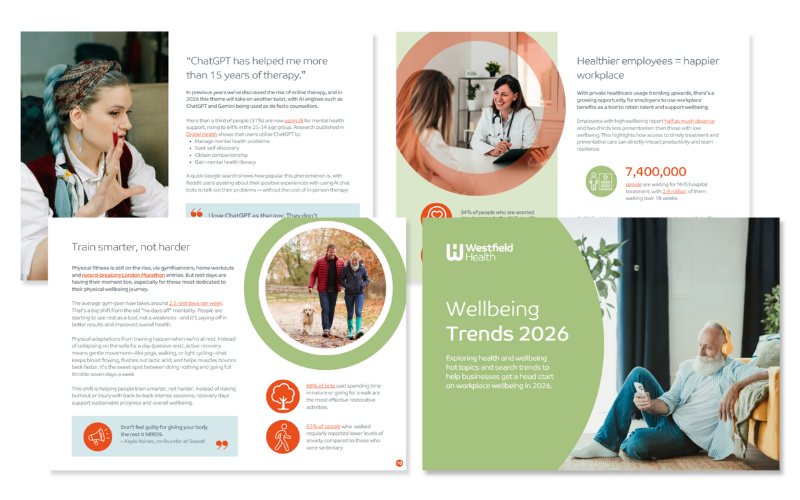
Our Wellbeing Trends 2026 report highlights five key themes shaping the year ahead.
Drawing on NHS insights, search trends, consumer behaviour and Westfield Health’s own research, the report gives businesses an early advantage in tackling the issues that matter most to their people now and in the months to come.