
Employee wellbeing strategy is a series of business initiatives that support the physical, mental, emotional, and professional health of your employees. An effective wellbeing strategy can play a key role in building a healthier workplace.
Improving wellbeing at work is about much more than creating a strategy on paper; it starts with understanding your team’s individual needs and identifying where you can make the biggest difference. In this guide, we’ll explore how to build an employee wellbeing strategy that shows an understanding of your workforce, and adapts with you as your business changes.
How to build an employee wellbeing strategy
1. Understand
No employee wellbeing strategy is the same from business to business. A CIPD report in 2025 suggested that only 64% of businesses are taking steps to understand and identify points of stress in the workplace. To build wellbeing initiatives that work for your business, you need to define what wellbeing means to your team and understand friction points that may be negatively impacting them. Consult your employees and collect anonymised data on their health and wellbeing concerns, engagement preferences and accessibility needs.
2. Identify
From your research, you should be able to identify the areas where your wellbeing strategy can have the greatest impact. Look for common themes in your data and employee feedback to identify priorities from the team.
Your priorities should also reflect your organisational objectives, allowing your company culture, mission and values to align as you grow. Consider reflecting on how improving employee wellbeing could promote employee engagement, retention, absenteeism and productivity.
3. Plan
Once you have taken the time to understand and identify the obstacles to employee wellness, it’s time to build initiatives that are designed to prioritise your people. Consider how different initiatives can work together as part of a wider strategy; for example, while health screenings can help employees understand their health risks, they can have more when employees are given access to wellbeing services such as health and wellbeing training courses and corporate fitness facilities that encourage them to a take proactive approach to their own health.
When reaching the planning stage of any employee wellbeing strategy, you should include:
- Wellbeing objectives
- Priority initiatives
- Target audience
- Timetable of initiative delivery
- Responsibility for implementing initiatives and encouraging employee engagement
- Method of feedback and success
4. Engage
The most thorough wellbeing strategy still requires engagement with your employees, and this is where lots of businesses can struggle. Making wellbeing easily accessible for every team member and planning clear communication is key to a successful wellbeing strategy.
To improve engagement, you should prepare leaders and managers with the tools they need to care for their teams. Visible management from leaders can demonstrate that wellbeing is a genuine organisational priority, rather than a short-term campaign. Wellbeing training courses can help prepare your leaders to actively support employee wellbeing every day.
While managers play a vital role in encouraging engagement, empowering access, and creating a safe space for employees, 62% of line managers have reported that they don’t get enough backing from their organisation to support the mental health and wellbeing of their teams. This lack of guidance can have a significant impact on employee engagement and the effectiveness of any wider wellbeing initiatives.
5. Review & adapt
Any employee wellbeing strategy shouldn’t be a one-off exercise. Regularly reviewing progress and feedback can help employers understand what’s working, identify gaps, and spot changes in employee needs.
To review and adapt your strategy, consider using both anonymous qualitative and quantitative measures to get a clearer image of your impact. This could include gathering employee feedback, tracking absence trends, and changes in relevant business data.
By continuously measuring and adapting your strategy, you demonstrate an authentic response to employee wellbeing and build a healthier workplace culture.
How do you measure an employee wellbeing strategy?
An employee wellbeing strategy can be measured in many ways. You could use the following measures together to gain a holistic review of your strategy.
- Employee feedback: Hearing directly from employees with surveys and focus groups provides first-hand insights into changing needs, engagement, and how your wellbeing strategy is being received.
- Workplace data: Business data such as employee turnover, sickness absences, and rates of engagement with training or wellbeing services can be useful in understanding changes in wider wellbeing trends.
- Return on investment: Businesses may choose to measure the impact of certain wellbeing initiatives based on their organisational impact. Understanding the return on investment could include changes in productivity, retention, presenteeism or absenteeism.
Measuring the effectiveness of employee wellbeing strategies is about using meaningful insights and data to continuously improve and adapt your approach, rather than simply establishing a ‘successful campaign’.
Support wellbeing with Westfield Health
Ready to develop your employee wellbeing strategy? Our workplace wellbeing workbook offers step-by-step guidance.
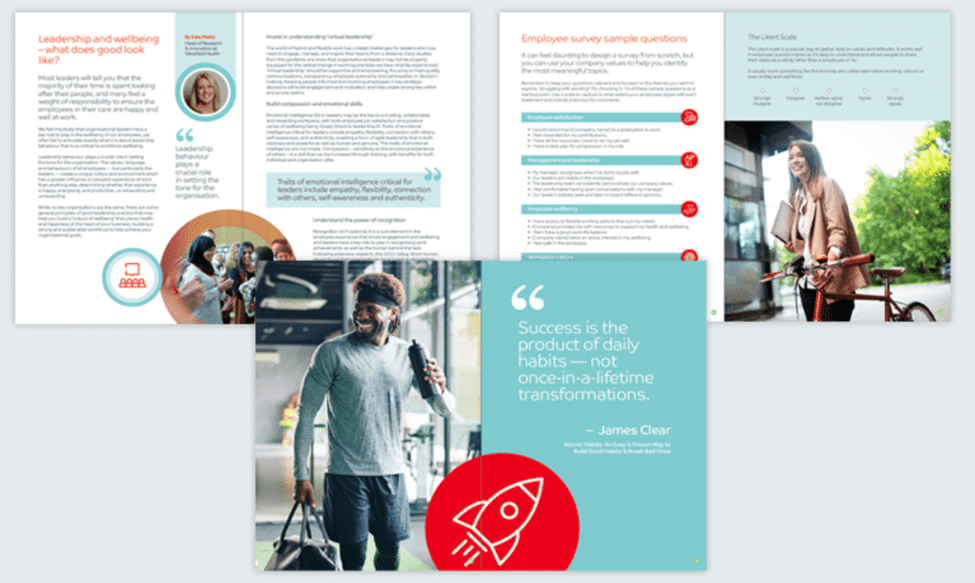
Employee wellbeing Strategy checklist
If you are getting started for the first time, here’s a simple checklist for building an employee wellbeing strategy.
- Understand employee needs
- Review existing data and initiatives
- Set wellbeing priorities
- Agree clear objectives
- Select appropriate initiatives
- Engage and train leaders to meet objectives
- Engage employees
- Measure impact
- Review and adapt strategy at regular intervals
Employee wellbeing strategy – FAQ
1. What is employee wellbeing?
Employee wellbeing is the overall mental, physical, emotional, and social health of workers as well as the systems put in place by organisations to protect people at work.
2. How can I improve wellbeing at work?
Having a thoughtful workplace wellbeing strategy that is designed around your team’s specific needs is a good step towards improving wellbeing at work and building a strong workplace culture. Building wellbeing into the heart of workplace culture helps businesses lead by example, with a framework for supporting your employees from day one.
A workplace strategy could include:
- Health screenings for employees
- Wellbeing at work training for employees and leaders
- Access to mental health first aiders and certification training
- Employee assistance programmes
- Advocating for mindfulness breaks
- DSE assessments
- Offering workshops and webinars on wellbeing factors
3. What are the four pillars of employee wellbeing?
There are pillars of employee wellbeing that are widely acknowledged to impact wellness in the workplace. These are mental, physical, social and financial wellbeing.
4. How do workplace health providers support employee mental health?
Workplace health providers like Westfield Health offer wellbeing solutions for employees and businesses who want to prioritise and support mental health and wellness. We offer a range of employee wellbeing solutions to improve employee wellbeing, while contributing to better business performance. Our wellbeing services for employee mental health support include: